
 العربية
 English
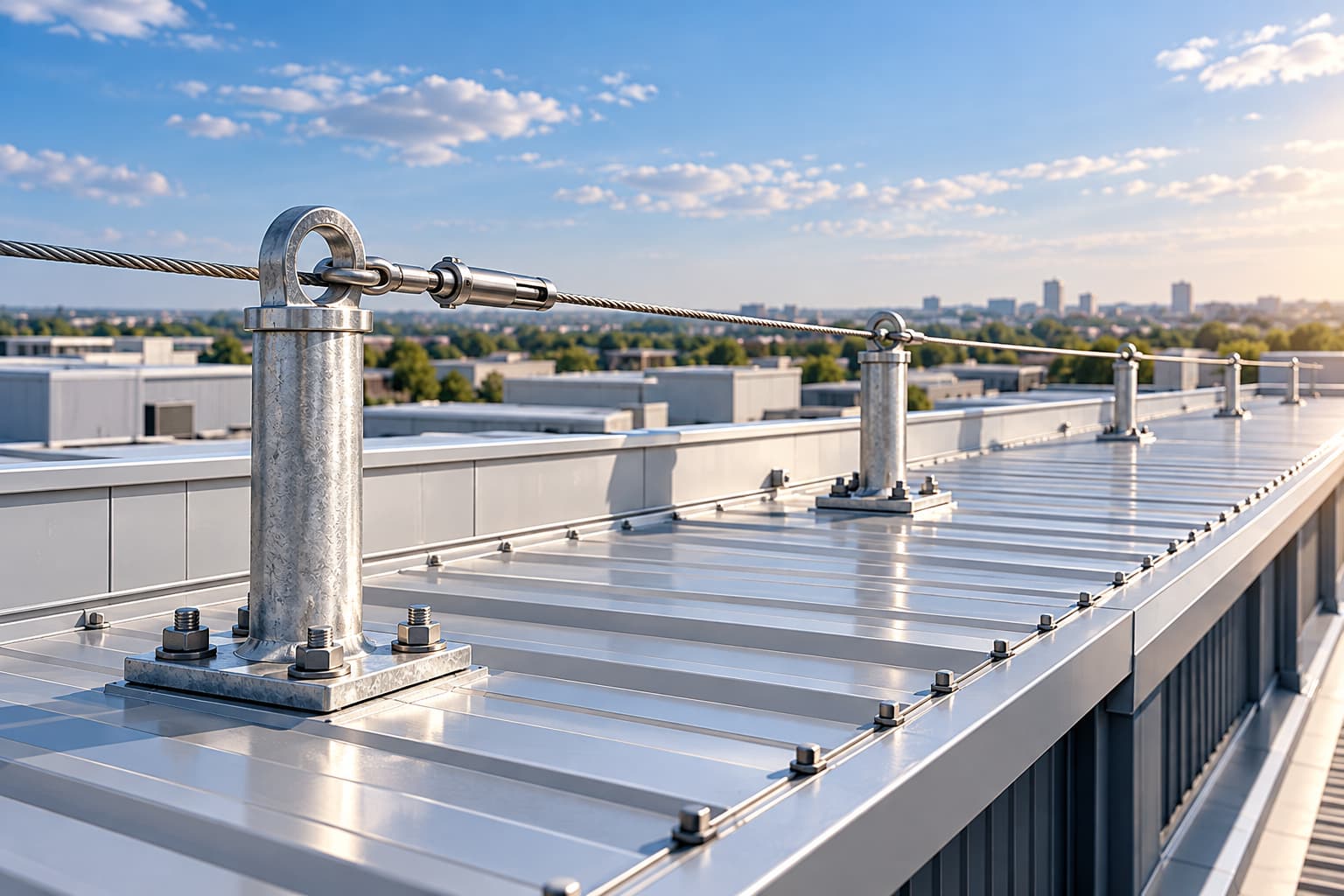

Lifeline Safety vs Rooftop Lifeline Which System Fits your Work Area?
Lifeline safety systems help protect workers from fall protection when they work or move at height. A rooftop lifeline system is a specific application for work on or around roofs, commonly where personnel need protected access for inspection, maintenance or servicing of roof-mounted equipment. The right lifeline arrangement depends on the work being performed, how workers need to move and the structure available to support the system.
The distinction matters when planning fall protection for commercial and industrial buildings in Saudi Arabia. A system suitable for horizontal movement on a roof may not be appropriate for a vertical access route or an elevated platform. Roof construction, anchorage, fall clearance, environmental exposure and the intended use of the system also need to be considered during planning.
This guide explains the relationship between lifeline safety and rooftop lifelines, compares the main configurations and applications, and highlights the practical factors that should be assessed before a system is selected and installed.
Difference Between Lifeline Safety and Rooftop Lifelines
Lifeline safety and rooftop lifelines are closely connected, but they refer to different parts of a fall protection system. Lifeline safety is the broader concept, covering systems designed to keep workers connected while they carry out work where a fall hazard is present.
A rooftop lifeline is a specific application of lifeline safety for work carried out on or around a roof. It is commonly used for roof, HVAC servicing, solar panel maintenance and access to other roof-mounted equipment.
The terms describe different aspects of a fall protection arrangement:
- Lifeline safety system: the broader fall protection solution.
- Horizontal lifeline: allows protected movement along a horizontal route.
- Vertical lifeline: supports protected movement along a vertical route.
- Rooftop lifeline: a roof-focused application, often using a horizontal configuration.
- Fixed or permanent lifeline: describes how the system is installed and intended to remain in place.
Lifeline systems are configured around the way workers need to access and move through a work area. A horizontal lifeline is designed for movement along a horizontal route, while a vertical lifeline is used where workers move up or down. A rooftop lifeline is specifically planned for work carried out on or around a roof.
This means these terms do not always describe separate systems. They can describe different characteristics of the same installation.
| Lifeline Types | Application Area | Worker Activity |
|---|---|---|
| Horizontal Lifeline | Roofs, platforms and elevated work areas | Moving between different work locations |
| Vertical Lifeline | Fixed ladders, towers and vertical access areas | Climbing or descending while remaining connected |
| Rooftop Lifeline | Commercial and industrial roof areas | Roof inspection, maintenance and servicing |
| Fixed Lifeline | Areas requiring permanent fall protection | Recurring inspection, maintenance and access work |
The important point is that a horizontal lifeline is not automatically a rooftop lifeline. Horizontal describes the direction of movement, whereas rooftop identifies the work environment.
Which Lifeline System Fits the Way Workers Move?
When selecting a lifeline arrangement, the direction in which the worker is moving and the area of worker movement are important factors to consider. The type of protection a worker needs to travel across a roof is different from what a worker needs climbing a fixed ladder, or working in a limited position.
- Horizontal movement: A horizontal lifeline can provide a connection route for workers moving along a defined path, such as across an exposed roof or elevated platform.
- Vertical movement: A vertical lifeline is intended for situations where the worker travels upward or downward, such as certain ladder or tower access arrangements.
- Limited movement: Where the task is concentrated around one location, a suitably positioned anchor point may be more appropriate than an extended lifeline.
- Guided movement: Some work routes may require a rigid rail or another guided system where the site and task call for it.
The choice should therefore begin with how the worker needs to move, rather than simply whether the work takes place on a roof. The travel route, fall exposure, required working position and available fall clearance should all be considered together.
A rooftop lifeline is only one possible approach to protecting workers on a roof.
| Roof Protection Option | Where It May Be Suitable | Main Characteristic |
|---|---|---|
| Rooftop Lifeline | Defined roof routes requiring worker movement | Provides a connection route for protected movement |
| Guardrail | Roof edges and areas where collective protection is practical | Creates a physical barrier |
| Single Anchor Point | Specific work positions | Suits limited movement around a defined point |
| Rigid Rail System | Defined travel routes requiring a rigid track | Provides guided movement along a rail |
| Safety Net | Certain construction or elevated work situations | Provides protection below the work area |
A rooftop lifeline can be a practical option when workers need to move between several work locations across an exposed roof and a continuous connection route is required. A different system may be more suitable when:
- A guardrail can provide practical collective protection.
- Workers only need access to one defined position.
- The work area does not require continuous horizontal movement.
- The proposed system cannot provide the required clearance.
- The supporting structure is unsuitable for the intended arrangement.
The correct approach depends on the work and site conditions rather than simply selecting the system because the work takes place on a roof.
What Should Be Assessed Before Selecting and Installing a Lifeline?
Before selecting a lifeline system, assess how workers will use the area and how the system would perform in a fall.
Key factors include:
- Fall hazards: Identify exposed edges, openings, fragile surfaces and changes in level.
- Worker movement: Establish the route workers need to follow and the positions they need to reach.
- Structural support: Confirm that the supporting structure can accommodate the proposed anchorage arrangement.
- Fall clearance: Check that sufficient clearance is available for the selected fall-protection arrangement.
- Number of users: Consider how many workers may use the system and whether the proposed configuration is suitable for that use.
- Component compatibility: Ensure the lifeline, anchors, connectors and other components are compatible and intended to work together.
- Rescue planning: Consider how a worker could be recovered after a fall and whether the site allows practical rescue access.
These factors help determine whether a horizontal, vertical, rooftop or another fall-protection configuration is appropriate. Detailed engineering, installation and inspection should then be carried out according to the requirements of the selected system.
Let’s Talk — Get Your Quote Fast
Need pricing, drawings, or quick product guidance? Contact Hitech Barrier and we’ll respond with a tailored quotation and technical support.
Why Roof Structure Matters for a Rooftop Lifeline
The roof surface alone does not determine whether a rooftop lifeline can be installed. The system also depends on the structure beneath the roof and the way the lifeline will be anchored to it. Roofs can have different construction arrangements, such as concrete slabs, steel structures, metal decking or roof systems with membrane finishes. Each may require a different anchorage approach.
A fixing point that appears suitable on the roof surface may not provide the structural support needed for the intended lifeline system. Before installation, the proposed arrangement should therefore be assessed against four connected factors:
Roof structure → Anchorage → Lifeline configuration → Worker movement
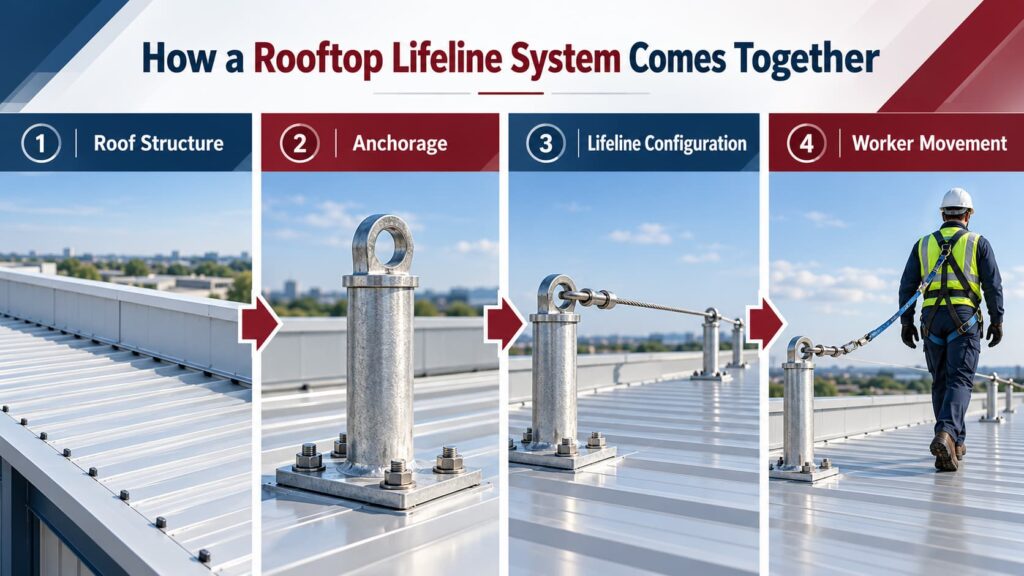
The roof structure must be able to support the anchorage arrangement. The anchorage must be compatible with the selected lifeline, and the lifeline layout must provide a suitable travel path for the work being performed.
This is why a rooftop lifeline designed for one building should not automatically be transferred to another building with a different roof construction. The supporting structure, anchorage locations, system layout and work requirements all need to be considered together.
The visible cable, rail or other lifeline component is only one part of the system. Its effectiveness depends on the complete arrangement, including the supporting structure, anchorages, connections and the way workers are expected to use the system.
Rooftop Lifeline Considerations for Saudi Conditions
Rooftop lifeline systems installed in Saudi Arabia need to be planned around both the work requirements and the conditions of the site. The roof environment can be a source of high temperatures, intense sunlight, dust and sand, and in the case of coastal locations, humidity and salt. These conditions should be taken into consideration in the selection of system components, the planning of installation and the establishment of inspection requirements.
Key considerations include:
- Heat and UV exposure: Materials and components shall be suitable for the environmental conditions at the site and the intended service life.
- Dust and sand: Can affect the condition and require more frequent inspection and cleaning.
- Coastal exposure: Buildings located near the Red Sea or Arabian Gulf may have more exposure to humidity and salt, so corrosion resistance is an important factor to consider.
- Roof construction: The anchorage arrangement must be compatible with the actual roof structure rather than selected from the roof surface alone.
- Maintenance access: The system reflects the routes workers regularly take to reach HVAC units, solar equipment and other roof-mounted assets.
- Inspection and maintenance: Lifeline components, anchors and connection points should be examined periodically for damage, corrosion or other signs of deterioration.
Systems should also be planned in line with the applicable Saudi occupational safety and health requirements and relevant standards for the selected equipment and installation.
Key Takeaways
Lifeline safety and rooftop lifelines are related, but they describe different aspects of fall protection. Lifeline safety system refers to the broader arrangement, while horizontal and vertical lifelines describe the direction of worker movement. A rooftop lifeline refers specifically to protection planned for work on or around a roof.
Choosing between these arrangements depends on more than the location of the work. The required movement route, fall hazards, roof structure, anchorage, fall clearance, number of users and environmental conditions all need to be considered. In Saudi Arabia, heat, dust, sand and coastal exposure may also influence component selection and inspection requirements.
A suitable lifeline system should therefore be planned around the actual work area and how workers need to access and move through it. The goal is not simply to choose a rooftop or horizontal system, but to select a fall-protection arrangement that is compatible with the structure, work activity and site requirements.
Frequently Asked Questions
What is the difference between a lifeline and an anchor point?
A lifeline provides a connection route that can support worker movement along a defined path, while an anchor point is generally intended for connection at a specific location. The suitable option depends on the worker’s movement and the task.
Can one lifeline system protect multiple workers?
It can, but only when the system is specifically designed, rated and installed for the required number of users. User capacity should be confirmed from the system design and manufacturer requirements rather than assumed from the presence of a lifeline.
Can an existing rooftop lifeline be extended to another roof area?
Not automatically. Extending a system can affect its layout, anchorage, clearance and structural loading. Any modification should be assessed and approved according to the system design and applicable requirements.
Does a rooftop lifeline need to cover the entire roof?
Not necessarily. The system should cover the areas and travel routes where fall protection is required. The layout should be based on access routes, work positions, fall hazards and the movement required for the task.
What happens if a worker falls while connected to a lifeline?
The system is intended to limit the consequences of a fall when correctly designed and used, but a fall can still result in serious injury. A suitable rescue plan should therefore be established before the system is used, including how the worker will be recovered after a fall.