
 العربية
 English

Lifeline Safety System in Saudi Arabia: Types, Applications and Safety Guide
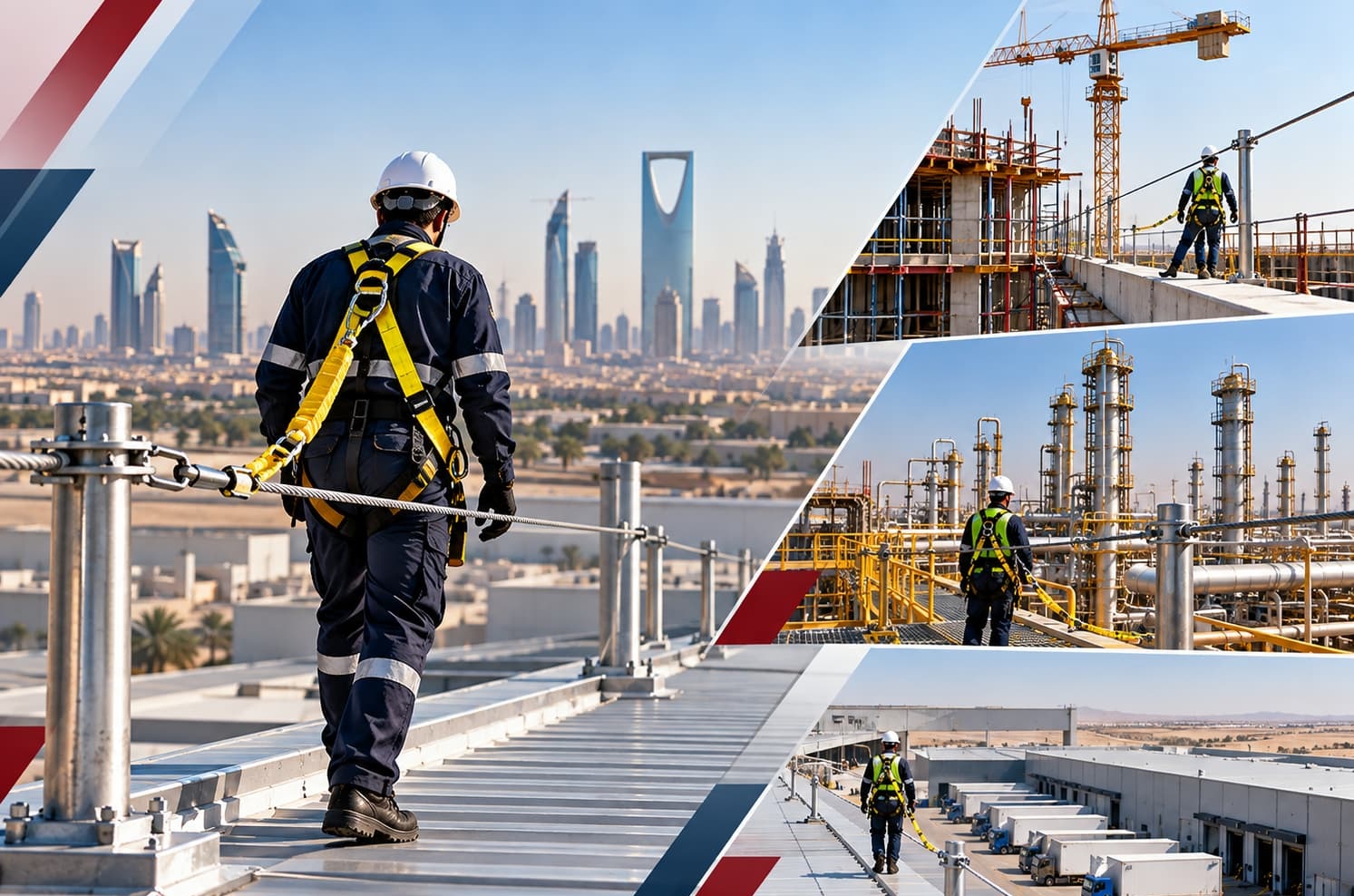
A lifeline safety system is a fall protection method that allows control movement within a specified work area while offering the secure connection between the worker and an anchorage system. A lifeline can be incorporated into a fall restraint or fall arrest system, depending on how it is designed and used. In Saudi Arabia, construction, industrial, manufacturing, logistics, oil and gas and building maintenance activities commonly include working at height. A suitable fall protection system is an important component of safe work planning when the workers are exposed to fall hazards.
Lifeline systems can be designed for permanent, temporary, overhead, vertical or horizontal applications. The work environment access needs, structural conditions, fall hazards, necessary clearance, number of users and relevant project requirements are some of the variables that determine the appropriate solution.
Lifeline systems must be appropriately assessed, designed, installed, inspected, and maintained for projects in Saudi Arabia in accordance with the specifications of the system manufacturers and any applicable safety requirements.
What Is a Lifeline Safety System?
A lifeline safety system is a component or arrangement within a personal fall protection system that provides workers with a controlled connection to a suitable anchorage while working at height.
A typical system includes a cable, rope or other approved lifeline , as well as anchorage points and structural supports. Along with full-body safety harnesses, may also be included for travellers, rope grabs, or other suitable attachment devices, depending on the system design. In order to ensure a continuous and secure connection, some horizontal lifeline system includes intermediate and anchors, as well as energy absorbing lanyards or other suitable connecting devices
Types of Lifeline Safety Systems
Lifeline systems can be designed according to the intended fall protection application, work area, structural layout and direction of movement.
Horizontal Lifeline Systems
A horizontal lifeline system allows workers to move within a designated horizontal work area while offering continuous fall protection. It is frequently used for building maintenance, construction, industrial platforms, bridges and infrastructure, roof maintenance and other elevated work areas.
The system uses either a cable or rail with appropriate travel and connection devices, depending on the application. To ensure effective fall protection, proper system design takes into consideration anchorage strength, structural capacity, fall clearance, system geometry and the number of users.
Vertical Lifeline Systems
A vertical lifeline system provides continuous fall protection for workers who must climb or descend fixed ladders, towers, vertical access routes, industrial structures, and other elevated work areas. Usually, the fall arrester, such as rope grab or shuttle, travels along the lifeline with the worker. Using a suitable connection device and appropriate intermediate and end anchors or a compatible traveller.
The lifeline, anchorage, harness, and connection device should be selected and used as a compatible system according to the manufacturers specification for safe or reliable performance.
Overhead Lifeline Systems
An overhead lifeline allows for controlled mobility across an elevated work area by placing the connecting point above the worker. Overhead connections are suitable, such as specific maintenance, loading, access area and industrial application where an overhead connection is appropriate.
The supporting structure, worker mobility, connection equipment, fall clearance, and potential fall path should be considered when designing the system.
Permanent Lifeline Systems
Permanent lifeline systems are designed for continuous use at a specific building or facility, They can be installed in access structures, industrial buildings, rooftops and other places where regular work at heights is anticipated.
Temporary Lifeline Systems
These systems are useful when a permanent system is not needed and are made for particular tasks or project requirements.
The volume of work, location conditions, project duration, structural requirements and system specifications should be considered when deciding between a permanent and temporary system.
Let’s Talk — Get Your Quote Fast
Need pricing, drawings, or quick product guidance? Contact Hitech Barrier and we’ll respond with a tailored quotation and technical support.
How Does a Lifeline Safety System Work in Saudi Arabia?
A lifeline safety system uses the standardized safety accessories to connect the worker’s fall protection equipment to an appropriate anchorage and structural support.
A basic sequence is:
- The workplace and fall hazards are assessed.
- A lifeline configuration is selected and designed.
- The approved design and manufacturer’s specifications are followed when installing the lifeline or anchorage system
- A suitable full-body harness and connection device are connected to the system by the worker.
- The worker remains connected to the system as intended while moving inside the authorized working area.
- Compatible components work together to arrest a fall and absorb the energy when the system is designed for fall arrest.
In order to prevent a worker from hitting a lower level or obstruction during a fall, the system must provide adequate fall clearances.
When choosing and utilizing worker fall protection equipment, OSHA guidelines also highlight the importance of assessing free-fall distance, total fall distance, anchoring , inspection, surrounding conditions and the manufacturer’s instructions.
When choosing a lifeline system, it’s critical to understand the distinction between fall restraint and fall arrest. The right system depends on whether the goal is to prevent a worker from reaching a fall hazard or arrest a fall after it begins.
| Criteria | Fall Restraint | Fall Arrest |
|---|---|---|
| Purpose | Prevents the worker from reaching a fall hazard. | Stops a fall after it begins. |
| When Used | When movement can be restricted before reaching an edge or opening. | When a worker may be exposed to a fall. |
| Clearance | Designed to prevent the fall hazard from being reached. | Requires adequate clearance to safely arrest a fall. |
| Equipment | Harness, connecting device, lifeline, and anchorage. | Harness, energy-absorbing lanyard or SRL, lifeline, and anchorage. |
The purpose of fall restraint is to prevent a worker from moving to a place where a fall could happen. A properly configured fall arrest system stops a worker after a fall has started and limits the forces experienced by the worker arrest.
The work task, site conditions, system design and relevant requirements all influence the best course of action. Therefore a lifeline is more than just a device that prevents falls in every situation.
Where Are Lifeline Safety Systems Used in Saudi Arabia?
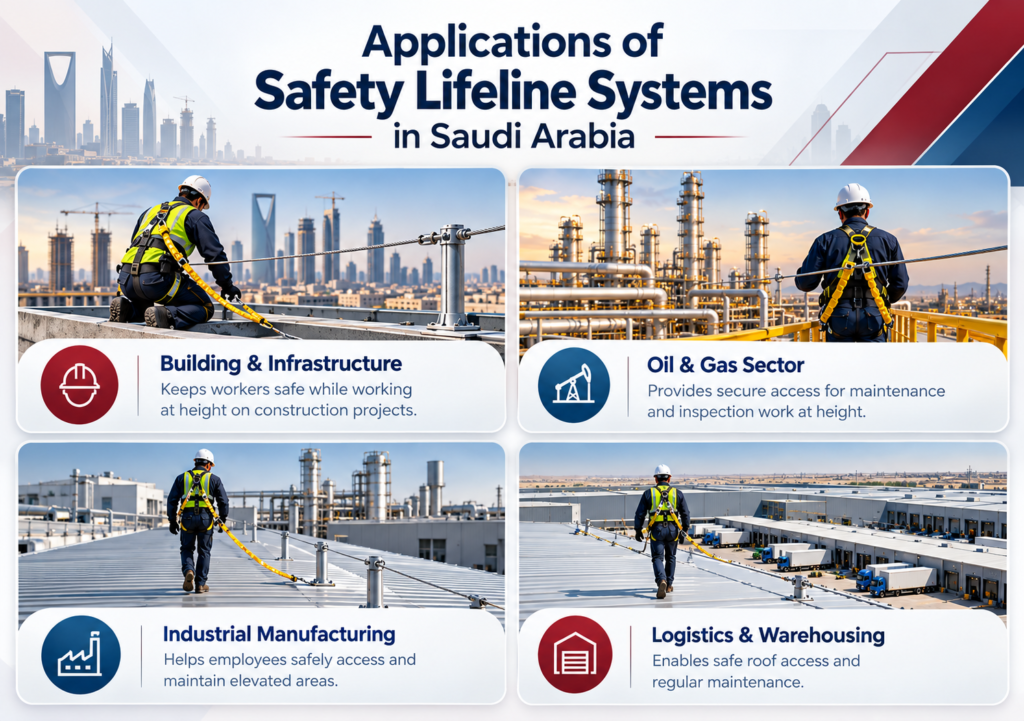
In Saudi Arabia, lifeline systems can support fall protection guidelines in a variety of industries and elevated work environments.
Rooftop Maintenance
Rooftops for inspection, HVAC maintenance, solar equipment, servicing, cleaning, repairs and other tasks require workers to access the rooftop area.
An appropriately designed lifeline system can offer a controlled connection when workers access the area in situations where workers are exposed to roof-edge or other fall hazards.
Construction and Infrastructure
Construction and infrastructure projects often involve work on roofs, structures, steelwork, bridges, platforms, and other elevated areas. Lifeline systems can be incorporated into fall protection planning where workers need controlled movement while carrying out installation, inspection, maintenance, or construction activities.
Oil and Gas Facilities
In the research facilities used in the oil and gas industry, employees routinely examine and maintain elevated machinery, pipes, tanks and processing structures. When appropriately designed and installed, the lifeline system can provide fall protection while allowing technicians control access to elevated work areas.
Industrial and Manufacturing Facilities
Workers in manufacturing facilities may need to access the roofs, equipment, ventilation system, high platforms, production structure and other regions for maintenance or inspection. When other fall protections are insufficient or unsuitable for the tasks, a well-designed lifeline system can offer workers engaged in certain tasks a dedicated fall protection connection.
Warehouses and Logistics Facilities
Regular equipment maintenance, facility servicing or roof inspections may require workers to access elevated areas in large warehouses and distribution facilities. Installing appropriate fall protection systems lowers workplace risks and facilitates safe access to the work area.
The lifeline, traveller, harness, and other components must be compatible and selected according to the intended application.
Lifeline Safety Standards and Compliance in Saudi Arabia
Lifeline safety systems should be designed, installed, and maintained according to the applicable safety requirements, system specifications, and relevant standards for the project.
Project specifications may reference fall protection standards and laws, such as:
- Saudi Occupational Safety and Health Requirements HRSD: Covers workplace hazards, worker protection, PPE, and safety measures.
- Occupational Safety and Health Management Regulation HRSD: Provides occupational safety and health management requirements for applicable establishments.
- Saudi Occupational Safety and Health Guidance HRSD: Provides guidance on occupational safety and workplace risks.
- Saudi Labor Law / Occupational Risk Prevention: Covers employer responsibilities for preventing occupational hazards and protecting workers
The applicable standards can vary depending on the system type, application, location, and project requirements. Proper documentation, inspection, and maintenance are considered part of the overall fall-protection system.
For projects in Saudi Arabia, the applicable requirements are reviewed during the design and planning stage to ensure that the selected lifeline system is appropriate for the intended application.
Lifeline System Design, Installation and Inspection
The site can be evaluated to determine fall hazards, access routes, work activities, structural conditions, anchorage location, fall clearance, environmental considerations, user capacity or reduce requirements prior to choosing a lifeline system.
This evaluation can be used to design a horizontal or vertical system with the right anchorage, connection equipment, structural capacity and fall clearance requirements. System geometry must also be carefully considered for horizontal lifelines because it can affect the forces applied to the lifeline and anchorages during a fall.
The approved system design and manufacturer’s instructions must be followed while installing lifeline systems, and used only suitable or designated parts. The manufacturer’s specifications and all relevant safety regulations should be followed for routine maintenance and inspection.
Damaged cables or ropes, corrosion, damaged anchors, deformed components, worn connecting devices or modifications to the supporting structure should be checked during inspection. According to the applicable procedure, any damaged or inappropriate component should be taken out of service.
Conclusion
A lifeline system can provide regulated fall protection for workers in industries such as construction, manufacturing, oil and gas, logistics, infrastructure and building maintenance. The appropriate lifeline system depends on the work activity and site conditions define the proper system, not just the cable or anchor. Different design considerations apply to horizontal, vertical, permanent and temporary.
As Saudi Arabia keeps increasing its industrial or foundational development, the fall arrest system has become an integral part of workplace safety designing. A well-planned Safety lifeline system support organization to make sure the workplace has no risk, optimize operations, or more protected optimization.
By combining appropriate safety equipment, correct system installation, scheduled audit or staff engagement, industries can reduce workplace hazards or safer working conditions over time.
Frequently Asked Questions
Find answers to common questions about lifeline systems, anchor points, fall restraint, fall arrest, fall clearance and work-at-height requirements.
What is the difference between a lifeline and an anchor point?
A lifeline provides a continuous connection for a worker, while an anchor point is the fixed structural point where the fall protection system is attached.
Should I choose a permanent or a temporary lifeline system?
Choose based on the work requirements. Permanent systems suit locations where work at height is frequent, while temporary systems are useful for short-term or changing work areas.
What is fall clearance, and why does it matter for lifelines?
Fall clearance is the space needed below a worker to safely stop a fall without hitting a lower surface or obstruction. It must be considered when designing and selecting a lifeline system.
Is fall protection mandatory for working at height in Saudi Arabia?
Fall protection requirements apply to relevant work-at-height activities, but the exact requirements depend on the work, location, and applicable Saudi regulations and project requirements. Employers should follow the applicable requirements for their specific site.
What international standards apply to lifeline systems?
The applicable standard depends on the system and project. OSHA requirements and relevant international fall-protection standards may be used alongside applicable local requirements. Always verify which standards apply to the specific system.
Who should design and install a lifeline system?
A lifeline should be designed and installed by suitably qualified and trained professionals. For example, OSHA requires horizontal lifelines to be designed, installed, and used under the supervision of a qualified person.